(Raw) Transcripts

I’ve wanted to publish printed transcripts of my sermons for years. The cost of doing so has been prohibitive. But now, because of the grace of God, God has blessed SermonAudio and Stephen Lee with technology that makes every sermon I preach available in languages spoken around the world, along with a printed transcript. This desire is now a reality.

May God bless the advancement of the gospel to the ends of the earth.

If your church does not archive your sermons on SermonAudio, you should ask me how to get started.

This past week at Eastside Baptist Church

Full Manuscript: HERE

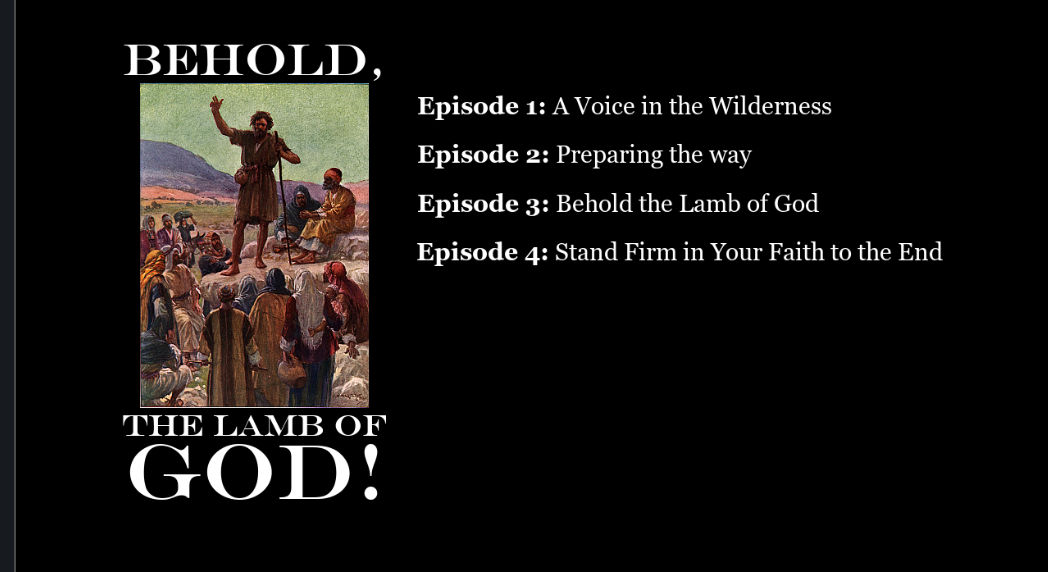
Behold, The Lamb of God

Welcome to the Wilderness Institute Studio. I’m introducing a four-part podcast series to be used during what many Christians around the world call Advent or the Christmas season. Advent is simply a word that means the coming of. It’s an announcement of. To the Christian, to the Bible-believing New Testament Christian, we actually would see that there are two significant Advents. One that’s already happened, that’s when Jesus came. And then the second would be when he comes again.

So the point of this podcast series is that there’ll be four parts to it. I’ll take about 10 minutes each week to share information about the upcoming sermon series I’ll be preaching during Advent, titled “Behold, the Lamb of God.” And so my hope is that you’ll use this personally or as a household together. Take a few moments on a Friday or a Saturday before the Lord’s Day, and just let this be something that helps prepare your heart for the message that you’re about to receive on the preceding Sunday.

So I hope you’ll join me for this. These will be short and simple, four of them in total. And so I’m looking forward to being a part of this. And my prayer is that it will be encouraging, edifying, and useful to your soul.

Local Elections Are Critical

A few weeks ago I sent an email to Twin Falls City Council candidates with several questions.

Here is the response I received from Nathan Murray. I’m Thankful for his reply and hope it will assist you in preparing to vote on Tuesday, November 4, 2025.

  1. How long have you lived in Twin Falls?
I moved to Twin Falls in 2016 after growing up in Boise. I came here for work and have built both my career and family here.
  2. What do you like most about living in Twin Falls?
I love the sense of community and that people here care for one another. We do a good job of blending small-town relationships with the energy of a growing regional center.
  3. What needs the most attention from the City Council in our beloved city?
Managing growth responsibly. We’re seeing a lot of change in housing, infrastructure, and traffic. The Council’s role is to help plan ahead so growth strengthens rather than strains what makes Twin Falls great.
  4.  What do you think is the most important long-term issue facing the city of Twin Falls?
Preparing our infrastructure and economy for sustained growth. This means smart planning, reliable utilities, and keeping Twin Falls affordable for families and businesses.
  5. Is affordable housing a government issue or a private sector issue?
It’s both. The private sector builds homes, but city policy, zoning, infrastructure, and permitting set the framework that makes housing attainable. Partnership is the key.
  6. What is your position on a local option sales tax for a city like Twin Falls?
I’m open to thoughtful discussion, but any local tax should be clearly tied to voter approved projects with transparent reporting. The public has to see where every dollar goes.
  7.  Are there reasons you could see where it would be better to turn down federal aid for city projects? Give some examples.
If the funding adds long-term obligations the city can’t sustain, or when it comes with conditions that don’t fit local needs, we should say no. Responsible stewardship sometimes means walking away from “free” money.
  8. How could a city provide both safety for minors and liberty for adults related to events that promote immoral lifestyles? (ie: LGBTQ+ parades, events in public spaces, and promotion in the children’s department of the library)
The Constitution protects free expression, and the city must uphold that. At the same time, we can encourage event organizers and public institutions to be thoughtful about age-appropriate material and programs. My goal is a community that treats everyone with respect while empowering parents to guide their children’s experiences.
  9.  (Related to a COVID-type scenario) If put in the position of voting for or against a mask mandate-type policy in the city, would you be in favor or against? What criteria would you want to have in place before you would vote for such a policy?
Public health decisions should rely on clear data, consultation with medical experts, and transparency with the public. I favor voluntary compliance and education first. A mandate would need strong local evidence that it’s necessary and effective.

Understanding Sin and Redemption in the Bible

The Nature of Sin

Sin is defined in the Bible as rebellion against God’s will. It is not merely a mistake but a deliberate act of disobedience. The origin of sin is traced back to Adam and Eve in Genesis 3, where their choice to disobey God introduced separation and death into the world. This concept is reinforced in Romans 5:12, which states that sin entered the world through one man, affecting all humanity. (12 Therefore, just as through one man sin entered into the world, and death through sin, and so death spread to all men, because all sinned— 13 for until the Law sin was in the world, but sin is not imputed when there is no law.”)

Consequences of Sin

Sin has profound consequences:

  • Spiritual Separation: Isaiah 59:2 explains that iniquities create a barrier between individuals and God, leading to a loss of fellowship. (“But your iniquities have made a separation between you and your God, and your sins have hidden His face from you so that He does not hear.”)
  • Death: Romans 6:23 states that the ultimate consequence of sin is death, which signifies both physical and spiritual separation from God. (“For the wages of sin is death, but the free gift of God is eternal life in Christ Jesus our Lord.”)
  • Impact on Relationships: Sin disrupts not only our relationship with God but also affects our interactions with others and the world around us.

God’s Plan for Redemption

Despite the severity of sin, the Bible reveals God’s plan for redemption:

  • Promise of a Redeemer: From the beginning, God promised a Redeemer who would defeat sin. This promise is fulfilled in Jesus Christ, who, according to Romans 5:8, died for our sins while we were still sinners. (8 But God demonstrates His own love toward us, in that while we were yet sinners, Christ died for us.)
  • The Role of the Cross: Jesus’ death and resurrection are central to redemption. Colossians 1:13-14 emphasizes that through His sacrifice, believers receive forgiveness and are transferred into God’s kingdom. (13 For He rescued us from the domain of darkness, and transferred us to the kingdom of His beloved Son, 14 in whom we have redemption, the forgiveness of sins.)
  • Grace and Faith: Redemption is a gift of grace, not something earned through works. Ephesians 2:8-9 highlights that salvation comes through faith in Christ, emphasizing the importance of repentance and trust in Him. (8 For by grace you have been saved through faith; and that not of yourselves, it is the gift of God; 9 not as a result of works, so that no one may boast.)

Implications

  • Sin necessitates the need for redemption.
  • Redemption necessitates the need for a Redeemer.
  • A Redeemer necessitates one qualified to justify must take the judgment of the sinner.
  • This kind of Redeemer that is required to do this kind of salvation must be outside of man.
  • The only one outside of man is the eternal God.
  • This eternal God is Father, Son, and Holy Spirit (Triune God). The Son is Truly God and Truly Man.

Invocation at City Council

Today, I had the pleasure of praying for the city I live.
“Seek the welfare of the city where I have sent you into exile, and pray to the LORD on its behalf; for in its welfare you will have welfare.” (Jeremiah 29:7)

Our Father who art in heaven,
Hallowed be thy name.

Guide the city council in righteous decisions, bring joy to their duties, and let Your truth prevail. May justice flow like an ever-present stream. Hear our prayer for the city’s welfare. We are thankful to You for the strong labor force that supplies the tax base, matched with the city’s finance department that transparently reports the spending with integrity. You have blessed Twin Falls with this, and we count this a kindness from You. 

We ask You to bless neighborhoods with safe homes where families are free from the tyranny of wicked men. Bless homes where men are respected, where women are cherished, and children are counted as blessings from You. 

We are grateful to You for our fire department, which is always ready for any emergency, and our police department, which serves with respect from minor incidents to serious crimes. We pray for safety and justice.

Bless our city for its diligent attention to sanitary living. We are grateful for the blessing of clean drinking water, its swift restoration when disrupted, and the proper discharge of waste from our homes and public spaces. We often overlook this blessing and the dedication of the public works department. Bless these men and women as deacons to the citizens. Ensure the safety of all who supply water, remove waste, and maintain roads and public safety. 

Bless the Parks and Recreation department. We live with the backdrop of beautiful parks, with clean air, and activities that encourage healthy living. Bless the volunteers who coach youth league sports, bless our public events with safety, and bless the maintenance crews who build, clean, and maintain the parks, fields, and equipment.

Finally… We ask that You bless the office personnel. If not for their attention to detail, the routine, even the mundane, we would not have the flourishing community that we have. Bless this city with more of what honors You. Bless Twin Falls with council members who honor You when they ask good questions and make hard decisions. Bless this mayor, bless the city manager and his office, bless the citizens. May the fame of our fair city reach the ears of all as a city blessed by her God. 

In Jesus’ name I pray, AMEN!

My Defense for “Close” Membership

To whom should we extend the right hand of Christian fellowship? To whom are we permitted to extend the right hand of Christian Fellowship?

Background: Over one year ago, I led our church to appoint a “Constitution Committee”, made up of members of the church and the elders. The purpose of this committee was to determine what course of action to put before the congregation related to our structural documents. The decision was made to move in a direction to repeal the current documents and replace with a new Constitution. These men have prayed together, worked together, disagreed with each other, and concluded with an agreed-upon document.

I found the experience challenging, frustrating, joyful, exhilarating, exhausting, and thrilling (all at the same time, a few times).

In endeavors like this, I find it interesting how fast the interpretation of what we have been doing takes on a life all by itself. How do others in other churches know so confidently about what we are doing before we even announce what we are doing? I will forever be mystified by this. My intentions are not nearly as wild as it is reported. As Mark Twain once quipped, “The report of my death has been grossly exaggerated.” The rumors of a doctrinal drift has been grossly exaggerated.

I hear what people say of my favorite author, John Bunyan: “He was barely a Baptist.” I hear other Baptist preachers when asked what they would be if they were not a Baptist, say; “I’d be ashamed.” Is it possible to respect both of those at the same time?

There’s this long line of good thinking related to membership of the local church. There is the complexity of definitions. And the argument that words matter. I agree. They do. All of them. If God welcomes a born-again believer into the universal church who has not been baptized by immersion post conversion, what should we do when God brings them to this local church?

I find it helpful to remember that not all Baptists, present or historic, were in agreement on every matter of our confession. It must have been quite an undertaking to gather independents together to agree upon a confession statement. When our Baptist ancestors set out to do so, they chose to adopt the format of the Westminster Confession. Both the preface and the appendix on Baptism, originally published in 1677 with the first drafting of what is now commonly known as the Second London Confession, give us some insight into the desire of Baptists to be in fellowship with orthodox Christianity. 

The Baptists in 1677 recognized the Westminster and the Savoy confessions as helpful in drafting their confession by stating…

“This we did the more abundantly to manifest our consent with both in all the fundamental articles of the Christian religion, as also with many others whose orthodox Confessions have been published to the world on the behalf of the Protestant in diverse nations and cities—and also to convince all that we have no itch to clog religion with new words, but do readily acquiesce in that form of sound words which hath been, in consent with the Holy Scriptures, used by others before us; hereby declaring, before God, angels, and men, our hearty agreement with them in that wholesome Protestant doctrine which, with so clear evidence of Scriptures, they have asserted. Some things, indeed, are in some places added, some terms omitted, and some few changed; but these alterations are of that nature as that we need not doubt any charge or suspicion of unsoundness in the faith from any of our brethren upon the account of them.”

Our Baptist fathers noted that the differences between the other confessions were small differences. 

“In those things wherein we differ from others, we have expressed ourselves with all candor and plainness, that none might entertain jealousy of aught secretly lodged in our breasts that we would not the world should be acquainted with. Yet, we hope we have also observed those rules of modesty and humility as will render our freedom in this respect inoffensive, even to those whose sentiments are different from ours.” 

I have been convinced by their words, not the words of what others said they said, convinced by the affinity and charity my Baptist fathers had with their Westminster and Savoy brothers. The preface and appendix on Baptism are examples of such charity. 

“…contention is most remote from our design in all that we have done in this matter.”

Finally, It is reported of the earliest of our post-Reformation Baptist kinsmen, Henry Jessy (1601-1663), that he was a “patient reformer.” I think the following is a fair description of a first-generation Particular Baptist.

“Despite his strong convictions about believer’s baptism, Jessey did not split the church over the question. As his biographer notes, “He always had some in his congregation of the Padobaptist Perswasion, & blamed those that made their particular opinion about baptism the Boundary of Church Communion.” This has led some to view Jessey as an advocate and practitioner of “open membership.” Others, such as John Bunyan, have looked to Jessey as an example of “open communion”—meaning that *unbaptized persons are permitted to the Lord’s Supper of a local church.

It seems that Jessey simply recognized that since believer’s baptism had not been a prerequisite for church membership at the onset, it was imprudent to require existing members to violate their consciences by submitting to what they would consider “re-baptism.” Instead, he patiently preached the truth and waited for the minds of his members to change, just as it had taken years for his own views on the matter to change.”

(From a doctoral dissertation on the reformation of “believer’s baptism” by Duesing, page 136)

I have written the following from these Primary Sources: The subjects of baptism, unity, and the local church in the New Testament. Historic Confessions (Westminster, Savoy, 1689 Baptist) statements of orthodox Protestant Reformed Churches, and What Reformed Baptist Believe. And these Secondary Sources:  John Bunyan, Robert Hall Jr, Abraham Booth, and John Piper. 

The argument is as follows:

Introduction: Form/mode of Baptism is important to me. The timing of Baptism is important to me.

Questions: 

  1. Should a person baptized by immersion in the name of the Father, Son, and Holy Spirit be considered for membership based on the mode of said baptism? Baptists would typically say “yes”; however, many false converts may be baptized and not be true disciples. Such individuals are however, granted membership in many local churches because the form/mode of their baptism was considered legitimate. There has been real injury to local churches for having unconverted members who had been baptized by immersion as members. This will continue to happen because only God knows the heart. This should not keep us from baptizing confessing believers.
  1. Should a person not baptized by immersion (but with water, in the name of the Father, Son, and Holy Spirit) be rejected for membership in a Baptist church because the form/mode of their baptism was considered irregular? Baptists might typically say “yes”; however, some may be baptized as an infant and have been truly converted by the grace of God as legitimately as any other convert. Not because of their infant baptism but because of a profound conversion. Denying them church membership because of an irregular mode/form of their baptism could deprive the local church of their gifts. This does happen.
  1. When Baptists refuse membership of a true convert based on the mode and timing of their baptism, we may be found guilty by God of refusing fellowship with a brother/sister based upon a second-tier issue, which is a serious violation of New Testament teachings of practicing Christian unity. Why are we willing to bring into the membership those baptized by immersion who may not be genuinely converted, while refusing to accept the membership of one who may be a true convert but was baptized as an infant? To do this, are we guilty of preemptive church discipline?

What Then Can We Allow and What Should We Forbid?

FIRST: This is not a conversation about how this church will practice baptism. And, we are united that baptismal regeneration is a serious error and does injury to the doctrines of Grace. We could argue that the mode/form of believer’s baptism is regular, but baptismal regeneration must continue to be rejected as a valid baptism. No person seeking to join this church, believing that their trinitarian baptism was required for their salvation, should be expected to be seated as a member in good standing of this church, even if by immersion. Mode/form is important, but it is not and cannot be the most important. 

Following is not an exhaustive list of thoughts but a place where thinking has been exercised with purpose.

  • Eastside Baptist does not practice the baptism of infants. 
  • This church will not allow membership to anyone who believes baptism is required for salvation.
  • This church could allow membership of all confessing believers who agree with Protestant Reformed Confessions (and the like). For example: 1689 Second London Baptist Confession, Westminster Confession, Savoy Confession, the Belgic Confessions, Philadelphia Confessions (both the Westminster and Baptist), New Hampshire Confessions, Baptist Faith and Message, etc.
  • The responsibility of those seeking to join this church is that they know and agree they are joining a Baptist Church that baptizes confessing believers only.
  • I conceded that some Baptists in our history indeed forbid membership of anyone not baptized by immersion post conversion. Some even go so far as to say that a Baptist can only accept people into membership if they were baptized in a Baptist church (more on that later). I recognize the reasons for this action with respect. I contend it is a fair representation of conclusions based in part on a larger body of Baptists who don’t all agree upon this reasoning.

SECOND: Different traditions about the proper mode/form of baptism (immersing, sprinkling, pouring), and different convictions with respect to the mode/form of baptism anyone has experienced, should not be a first-tier reason to exclude a person from membership of the local church if he is first a genuine born-again believer. Sanctification is a proper work of the Holy Spirit. No conscience should ever be violated if a credible conversion can be determined by the statement of faith of the individual seeking to join this church. Should we accept the Baptism of someone baptized at a Calvary Chapel Church, a Mennonite Church, a Christian Church, a Community Church, a KJV only church, an Assembly of God Church, a Presbyterian Church, or a Congregationalist? I will argue we are closer theologically to any Westminster or Savoy Confessional church than most of the others.

  • First-tier reasons to allow membership to this local church should include believing the Trinity (Diety of the Father, Son, and Holy Spirit), the five solas (Scripture alone, Christ alone, faith alone, grace alone, for the glory of God alone), virgin conception, life, death, resurrection and physical return of Christ. Jesus is still both God and man. There is only one God in all existence. Must be born again. Salvation is by grace alone, through faith alone, in Christ alone. Jesus is the only way to God the Father.
  • The absence of baptism here does not mean that baptism is not important; it is a statement that believer’s baptism is not a first-tier doctrine. NOTE: Baptismal regeneration is a first-tier issue because it does not rest on the work of Christ alone. How and when one is baptized is important to us, but is not a first-tier issue. When we state we will only baptize by immersion of confessing believers, we are speaking with clarity of our belief and practice; we should not feel the need to compromise on this second-tier practice while being gracious to our brothers who practice and believe otherwise.

THIRD: All people seeking to join this church should never be surprised that this local church practices baptism by immersion of confessing believers only. Accepting a born-again believer with an irregular baptism does not compromise our position of credobaptism (believer’s baptism). Different positions of mode or timing of baptism are not weighty enough matters to exclude them from membership in this local church. 

  • Requirements for membership in the local church should not be narrower than what Christ requires. Again, we should practice within the realm of our convictions. This is being gracious, not compromising. Compromising would be that we would no longer exclusively practice baptism by immersion of confessing believers.
  • Being gracious is different from compromising. Where both can have beneficial attributes when forming membership, people can practice graciousness within a fellowship while not compromising the values or tenets of the organization. I argue we do this every time we gather.

FOURTH: There is sufficient history, even among our Baptist kinsmen, to establish that credobaptists have divided many times over this matter.  

  • One church will baptize a 5-year-old, another will not baptize until 18 or 19 or 20. 
  • Another church will only baptize in running water, 
  • Another will dip the candidate three times (in the name of the Father, the Son, the Holy Spirit). 

FIFTH: Not all doctrines are of equal weight in shaping Christlike holiness and love. (HT: John Piper)

  • The translation of the Bible is very important. There are some translations to avoid and should not be considered as suitable for use by our church, however, we would not forbid a member from using another bible translation that what the preacher uses. At our church, the elders use NASB, ESB, KJV, NKJV. I’ve even been known to consult my NIV from time to time (not very often). We would not require any member to stop using a legitimate translation and only use one of our approved translations. 
  • There was a time when nearly all Christians in Baptist churches had been won over to a dispensational eschatology. It is a theological drift that a generation of Baptists know. It is not just a viewpoint, it has theological implications that are at odds at times with Biblical orthodoxy. Yet we would not forbid membership on the three eschatological viewpoints.

SIXTH: The Westminster and Savoy defense of infant baptism admits that circumcision was not a sign of belonging to the believing remnant of true Israel, but rather was a sign of hope that a child would prove to be a “child of promise” and not just a “child of the flesh” (John Piper).  We can see how they make the correlation between circumcision (old sign) with baptism (new sign). This can no doubt cause confusion, but I think it is an attempt to understand how our brothers defend their belief and practice.

  • The issue is whether membership in the visible New Covenant Community should include infants who do not profess faith, which is the outward mark of the New Covenant Community. A local community of Baptists may view their children as part of the local church without claiming they are part of the universal church.
  • As Baptists, we do not see any New Testament example of a Biblical case for infant baptism. However, I think we may be closer than one may think to the application of the rationale our Westminster and Savoy brothers make of children belonging to believing parents having serious measures of responsibilities. This baptism is not, and should not be, treated as an instrument or evidence of an infant’s regeneration. Our Westminster and Savoy brothers teach this as an expression of hope that in a Christian family, the child will be the beneficiary of the means of saving grace by word and prayer and all forms of Christian nurture. Our Baptist practice of baptism by immersion of confessing believers must not wrongly accuse our brothers of baptismal regeneration. That would be uncharitable and inconsistent with their historic confessions.
  • Do some who hold to the Westminster and Savoy Confessions treat this practice wrongly? Yes, in the same way, as do some who hold to the Baptist Confessions.

SEVENTH: None of the historic confessions treat infant baptism as baptismal regeneration or even guarantee that saving grace be applied to the children. All such views are a perversion of the primary documents and historic teachings. Just as it is a perversion of our Baptist doctrines that the baptism of one “confessing” faith in Christ is secure in Christ. Only those whom the Father has elected are of the house of God. There are not two houses of God. There is but one. (HT: John Piper)

  • I do not view the Westminster or Savoy Confessions as teaching baptismal regeneration. This church must be careful not to wrongly accuse our brothers of doing so, either. 
  • Where I disagree with the practice of infant baptism, I do not view the doctrine of the Westminster or Savoy to be heterodox to the Christian faith. It is an irregular application of what the Bible teaches related to baptism. Therefore, I do not see it as a weighty or central enough departure from historic Christianity to exclude such a person from membership. 
  • I repeat, this does not compel me to compromise on our practice of believers’ baptism in an attempt to be charitable. Rather, it strengthens my resolve to be convictionally charitable with joy.
  • If an individual has all the qualifications of being born again and is otherwise persuaded from Bible study and a clear conscience that his baptism is valid and still seeks to join our Baptist church, which only baptizes believers by immersion, he not only can, but should be welcomed with the right hand of Christian fellowship. In such a case, we should not be compelled to compromise our convictions to ease his conscience. We can teach and pray toward a change of mind that baptism by immersion may one day be their desire. 

EIGHTH: We have no reason to avoid forming partnerships with Christians who hold to the historic confessions in orthodox Christendom. We should expect to be edified and informed by theologians in the glorious kingdom of Christ.

NINTH: Related to communion. We practice what we call “close” communion. Historically, Baptist are a mixed bag on this subject as well. We can live with respect for our Baptist kinsmen who bar nonmembers from taking communion. This is referred to as “closed” communion. 

  • We welcome to the Lord’s Table those who are members of the catholic (universal) church. Meaning those who hold to historic and orthodox Christian confessions. 
  • As stated before, those who hold to a baptismal regeneration persuasion would not be suitable participants with us at the Lord’s Table.
  • We would fence the table from “open” communion, ie, the unrepentant open profane sin. 

Conclusion:

If we hold that paedobaptism as invalid, then we should carry that logic to its full conclusion. If the paedobaptized individual should be barred from this local church as a member, he should be barred from the table as well. If barred from the table, he should be viewed as an unbeliever. We should apply this equally to all paedobaptized people in church history and ban the reading of paedobaptist theologians and forbid the singing of songs they have written. We should practice consistency with the conclusion. I, for one, cannot make any of the latter conclusions, so why forbid the first?

Rather, may the day come when the debate of water will no longer divide the living saints in Christendom. Can the Lord’s church not be in unity? If not now, may it happen before we breathe our last or at least in our children’s lifetime. I am perfectly willing to commune and fellowship with the historic orthodox paedobaptists while not compromising our credobaptist practice.

Respectfully submitted.

They Are Still Castrating the Boys

It has been just over one week since the assassination of Charlie Kirk, a martyred brother. The shock has been felt deep.

Yet, they are still castrating the boys.

Is your local School board still indoctrinating a generation of secular humanists? Is your local library board still promoting LGBTQ+- to the children? Is your local hospital still castrating the sons of the land? Are you still in an adulterous relationship with demons? Are you still given to idolatry? Do you sit week after week in the church-house with hatred toward your brother in Christ? Are pre-born babies still being murdered in the land? Repent of your love for darkness, for you still don’t hate your idols. They are still doing what the church gave them permission to do.

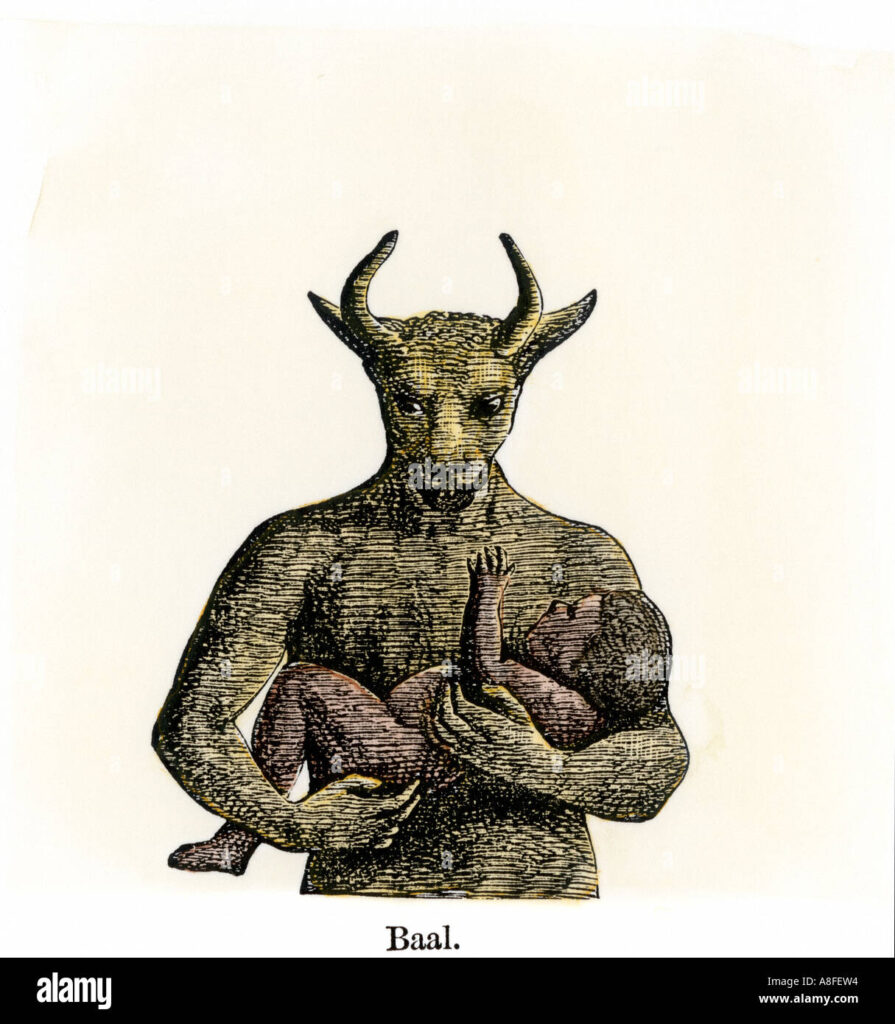
Brothers and sisters, repent. Believe the Gospel. Turn from baal and to Christ.

“Jacob said to his household and to all who were with him, ‘Put away the foreign gods which are among you, and purify yourselves and change your garments; and let us arise and go up to Bethel (the house/gate of God)…’
Genesis 35:3-4

Biblical Unity

Prayer and Fasting Guide

September 1-7, 2025

It is my hope that by now you have read the MOTION Draft of the proposed Constitution. The reason for this requirement of a 30 day delay between the motion to repeal and replace is to allow sufficient time to ask questions. You have access to all members of the committee, including the elders. Call, email, or schedule a time to visit with any of the committee members. They want to help you understand how the committee came to the conclusion on this motion. 

Next week, I will explain some details of how the membership meeting will function on Sunday, September 21, at 5:30 PM. 

This week, I want us to spend some time reading and meditating on when our Lord prayed for His disciples and for the church in following generations, even including us.

You will read through John 17 multiple times this week. I will ask you to meditate and fast intermittently throughout the week. May God bless your time and may He strengthen what needs strengthening.

Fasting is a Christian discipline. Fasting should not be a discipline you practice for show to impress others. Fasting is a discipline that should drive us to pray with great intention. 

Christians should have a daily practice of abstaining from sin. We should also, from time to time, include the discipline of denying oneself from good and permittable pleasures, especially eating.   Fasting is both personal and communal. 

I’m asking you to practice fasting this week. We will begin small and end with more intensity,  a day of intentional discipline. The desire is to intentionally strengthen the soul and deepen our faith related to our relationship with God.

Pray for each other this week.

Be sure to think about the things you have learned and observed from the past two weeks. This will be important that we see these 30 days as a connected practice with the intention to strengthen the spirit and to humble the flesh

What are some important principles you want to put into practice from Romans 12:1-3 and Hebrews 12:1-14?


Monday, September 1, 2025

Fast from using your phone for entertainment for a 24 hour period of time.

Read John 17

1 Jesus spoke these things; and lifting up His eyes to heaven, He said, “Father, the hour has come; glorify Your Son, that the Son may glorify You, 2 even as You gave Him authority over all flesh, that to all whom You have given Him, He may give eternal life. 3 This is eternal life, that they may know You, the only true God, and Jesus Christ whom You have sent. 4 I glorified You on the earth, having accomplished the work which You have given Me to do. 5 Now, Father, glorify Me together with Yourself, with the glory which I had with You before the world was.

6 “I have manifested Your name to the men whom You gave Me out of the world; they were Yours and You gave them to Me, and they have kept Your word. 7 Now they have come to know that everything You have given Me is from You; 8 for the words which You gave Me I have given to them; and they received them and truly understood that I came forth from You, and they believed that You sent Me. 9 I ask on their behalf; I do not ask on behalf of the world, but of those whom You have given Me; for they are Yours; 10 and all things that are Mine are Yours, and Yours are Mine; and I have been glorified in them. 11 I am no longer in the world; and yet they themselves are in the world, and I come to You. Holy Father, keep them in Your name, the name which You have given Me, that they may be one even as We are. 12 While I was with them, I was keeping them in Your name which You have given Me; and I guarded them and not one of them perished but the son of perdition, so that the Scripture would be fulfilled.

13 But now I come to You; and these things I speak in the world so that they may have My joy made full in themselves. 14 I have given them Your word; and the world has hated them, because they are not of the world, even as I am not of the world. 15 I do not ask You to take them out of the world, but to keep them from the evil one. 16 They are not of the world, even as I am not of the world. 17 Sanctify them in the truth; Your word is truth. 18 As You sent Me into the world, I also have sent them into the world. 19 For their sakes I sanctify Myself, that they themselves also may be sanctified in truth.

20 “I do not ask on behalf of these alone, but for those also who believe in Me through their word; 21 that they may all be one; even as You, Father, are in Me and I in You, that they also may be in Us, so that the world may believe that You sent Me.


Tuesday, September 2, 2025

Fast from sugar and sugar substitutes for a 24-hour period of time.

Re-Read John 17 and list things you see Jesus prayed for.


Wednesday, September 3, 2025

Fast for a full 24-hour span of time from drinking anything other than water. Meditate on Living Water every time you drink water

I want to encourage you to read some of the articles at Free Grace Broadcaster on the subject of UNITY. 

https://www.chapellibrary.org/book/cunifg/christian-unity

The article by Charles Spurgeon is especially good on this subject. You can read other articles written by others throughout church history at the link above. I have included a copy of Spurgeon’s article for convenience.

Charles H. Spurgeon (1834-1892)

That they all may be one.—John 17:21

HE most tender and touching prayer of the Master contained in this chapter opens His inmost heart to us. He was in Gethsemane, and His passion was just commencing. He stood like a victim at the altar, where the wood was already laid in order and the fire was kindled to consume the sacrifice. Lifting up His eye to heaven, with true filial love gazing upon His Father’s throne, and resting in humble confidence upon heaven’s strength, He looked away for a moment from the strife and resistance unto blood which was going on below. He asked for that upon which His heart was most fully set. He opened His mouth wide that God might fill it. This prayer, I take it, was not only the casual expression of the Savior’s desire at the last, but it is a sort of model of the prayer that is incessantly going up from Him to the eternal throne. There is a difference in the mode of its offering; with sighs and tears, He offered up His humble suit below, but with authority He pleads enthroned in glory now; but the plea is the same. That which is desired while still below is that which His soul pants after now that He is taken up and is glorified above. 

It is significant, beloved, that the Savior should in His last moments not only desire the salvation of all His people but should plead for the unity of the saved ones, that being saved they might be united. It was not enough that each sheep should be taken from the jaw of the wolf. He would have all the sheep gathered into one fold under His own care. He was not satisfied that the members of His body should each of them be saved as the result of His death. He must have those members fashioned into a glorious body. Unity lying so very near the Savior’s heart at such a time of overwhelming trial must have been held by Him to be priceless beyond all price.

These words of the Savior have been perverted to the doing of a world of mischief. Ecclesiastics have fallen asleep, which, indeed, is their ordinary condition; and while asleep, they have dreamed a dream—a dream founded upon the letter of the Savior’s words, of which they discern not the spiritual sense. They have proved in their own case, as has been proved in thousands of others, that the letter killeth, and only the spirit giveth life. Falling asleep, I say, these Ecclesiastics have dreamed of a great confederation, presided over by a number of ministers, these again governed by superior officers, and theseagain by others, and these topped at last by a supreme visible head who must be either a person or a council—this great confederacy containing within itself kingdoms and nations and becoming so powerful as to work upon states, to influence politics, to guide councils, and even to gather together and to move armies.

True, the shadow of the Savior’s teaching, “My kingdom is not of this world” (Joh 18:36), must have caused an occasional nightmare in the midst of their dream, but they dreamed on; and what is worse, they turned the dream into a reality, and the time was when the professed followers of Christ were all one, when looking north, south, east, west, from the center at the Vatican, one united body covered all Europe. And what was the result? Did the world believe that God had sent Christ? The world believed the very opposite. The world was persuaded that God had nothing to do with that great crushing, tyrannous, superstitious, ignorant thing that called itself Christianity. Thinking men became infidels, and it was the hardest possible thing to find a genuine intelligent believer north, south, east, or west. All professors were one, but the world believed not; the fact being that this was not the unity which Jesus had so much as thought of—it was never His intention to set up a great united body to be called a “church” that should domineer and lord everywhere over the souls of men and comprehend within it ranks kings, princes, and statesmen who might be worldly, ungodly, hateful, sensual, devilish. It was never Christ’s design to set up a conscience-crushing engine of uniformity. So, when it was brought to perfection and set to work with the greatest possible vigor, the great mandevised machine, instead of working out that the world should believe that the Father had sent Christ, wrought out just this: the world did not believe anything at all but became infidel, licentious, and rotten at the core. The system had to be abated as a common nuisance, and something better [had to be] brought into the world to restore morality.

Yet people dream that dream still: even good people do so. The Puritans, after they had been hunted and haled to prison in this country, fled to New England. [But] no sooner had they seated themselves upon the shore than they began to say, “We must all be one; there must be no schism,” and the big whip was brought out for the Quaker’s6 back, and the manacles7 for the Baptist’s bleeding wrists because these men, somehow or other, would not be one after this kind of fashion, but would think for themselves and obey God rather than man. Now-adays, Dr. Pusey dreams that the Anglican and the Russian Church may be united, and then perhaps the Romish may chime in; and so once more all may be one. A mere dream! A mere chimera of a kindly but whimsied brain! If it should ever come to be a reality it would prove to be a upas tree, at the roots of which every honest man must at once lay his axe.

But what did the Savior mean, “That they all may be one; as thou, Father, art in me”? We must begin at the beginning. What were the elements of this unity that Christ so anxiously desired? Answer very distinctly is given to us in this chapter. The unity was to be composed of the people who are here called “they,” “that they all may be one.” Will you let your eye run down the chapter to see who “they” are? Look in the second verse: “That he should give eternal life to as many as thou hast given him.” The unity then proposed is of persons specially given to Jesus by the Father. Not then of all men who happen to dwell in any particular province, district, or city, but a unity of persons who have received, not common life as all have, but life eternal. Special persons, then, who have been quickened by God the Holy Ghost and have been brought into vital union with the person of the Lord Jesus are to be one.

Further, they are described in the sixth verse as persons to whom God’s name has been manifested, people who have seen what others never saw and have beheld what others cannot know. They are men given out of the world, so the verse tells us—chosen men, taken out from the ordinary mass—not, then, the mass, not kingdoms, states, empires, but selected persons. They are persons who have been schooled and have learned unusual lessons: “Now they have known that all things whatsoever thou hast given me are of thee” (Joh 17:7); and they have learned their lesson well, for we find it written, “They have kept thy word…They have believed that thou didst send me” (Joh 17:6, 8). They are described in the ninth verse as being prayed for by Christ in a sense in which He never prays for the world at all. They are people, according to the tenth verse, in whom God is glorified, in whom the name of Jesus shines with resplendent luster. Look the whole chapter through, and you will discover that the unity which the Master intended was that of chosen persons who, by the Holy Spirit conferring life upon them, are led to believe in Jesus Christ—spiritual-minded men who live in the realm of spirit, prize spiritual things, and form a confederacy and a kingdom that is spiritual and not of this world… 

Of what, then, is the one church of God composed? Is it composed of the Church of England, the Congregational Union, the Wesleyan Conference, and the Baptist body? No, it is not. Is not, then, the Church of England a part of the church of Christ, and the Baptist denomination a part? No…There are believers united with the Church of England who are a part of the body of Christ, and there are believers in all denominations of Christians, yes, and many in no visible church at all, who are in Christ Jesus, and consequently in the great unity…The spiritual unity is made up of spiritual men, separated, picked out, cleared away from all the mass with which they happen to be united. I have spoken very boldly, perhaps, and may be misunderstood; but I mean this: that you cannot take out any visible church, however pure, and say that, as it stands, it belongs to the spiritual unity for which Jesus prayed. There are in the visible churches a certain number of God’s elect ones, and these are of the body of Jesus Christ; but their fellow professors, if unconverted, are not in the mystical unity. Christ’s body is not made up of denominations, nor of presbyteries, nor of Christian societies. It is made up of saints chosen of God from before the foundation of the world, redeemed by blood, called by His Spirit, and made one with Jesus.


From The Metropolitan Tabernacle Pulpit Sermons, Vol. 12
(London: Passmore & Alabaster, 1866), 2-4.


Thursday, September 4, 2025

Re-read John 17

List the ways the Father, the Son, and the Holy Spirit relate to each other. 

How does the discipline of submitting relate to what you observe in John 17?


Friday, September 5, 2025

Prayer and Fasting

Re-read John 17. 

As your health allows…

  • Fast from Breakfast
  • Fast from Lunch
  • Fast from Supper
  • Fast from all eating from sunrise to sunset
  • Fast for a full 24 hours

Saturday, September 6

Re-read John 17

What article(s) in the proposed constitution are you unclear about?

With the aid of John 17, how will you instruct your soul to speak about your concern?

Could you get clarification by speaking to a committee member or an elder?

You should not remain silent to “keep the peace”. But your spirit should discipline your mind to speak carefully. Guard your heart from impuning motive to others if you have not sought clarification.

Sunday, September 7

Prepare to gather with the church family. We have a Sunday morning Bible study every Sunday at 9:15. Be sure to arrive in the auditorium before 10:30, as we begin the worship service with singing and praying. 

We should put seriousness upon this meeting as we humble ourselves before God. It is more important to be humbled before God by preparing to participate in the entire worship service. We will conclude our worship service with time at the Lord’s Table together. Don’t miss that beautiful moment of spiritual nourishment.

Pray for you and pray for our church.
All Hands On Deck

Prayer and Fasting Guide

August 24-30

We have already focused upon the phrase “the spirit is willing, but the flesh is weak.” Meaning there are some things we are called to that requires more that physical strength and the need to discipline our minds. 

Remember what Christ instructed the disciples to do while they were with him in the garden? They were told to “keep watch” and “pray”. 

Let’s keep this with us as we proceed through this week.

There are two passages of Scripture we will meditate and pray through this week. Hebrews 12 and Romans 12.

In Romans 12:1-2 we are “urged” to “present our bodies a living and holy sacrifice.”

We should be aware that we sometimes attempt things that require honor of God and the careful treatment of each other in a way that doesn’t accomplish either. These two disciplines do not war against each other. They are how Jesus answered the pharasees, It is stated in our purpose in the proposed Constitution: 

“To love the Lord our God with all our heart, soul, mind, and strength, and to love our neighbors as ourselves (Deuteronomy 6:5; Matthew 22:37-40; Mark 12:30-31). We are called to pursue holiness, deepen our relationship with God, and extend His love to all people, reflecting His character in our lives.”

Pray for spiritual strength to do what the flesh is too weak to do. 

For the glory of God alone.

Monday August 25

READ Romans 12:1-13 (NASB)

Meditate on the HIGHLIGHTED Parts

We will use this passage for several exercises this week.
1 Therefore I urge you, brethren, by the mercies of God, to present your bodies a living and holy sacrifice, acceptable to God, which is your spiritual service of worship. 2 And do not be conformed to this world, but be transformed by the renewing of your mind, so that you mayprove what the will of God is, that which is good and acceptable and perfect.

3 For through the grace given to me I say to everyone among you not to think more highly of himself than he ought to think; but to think so as to have sound judgment, as God has allotted to each a measure of faith. 4 For just as we have many members in one body and all the members do not have the same function, 5 so we, who are many, are one body in Christ, and individually members one of another. 6 Since we have gifts that differ according to the grace given to us, each of us is to exercise them accordingly: if prophecy, according to the proportion of his faith; 7 if service, in his serving; or he who teaches, in his teaching; 8 or he who exhorts, in his exhortation; he who gives, with liberality; he who leads, with diligence; he who shows mercy, with cheerfulness.

9 Let love be without hypocrisy. Abhor what is evil; cling to what is good. 10 Be devoted to one another in brotherly love; give preference to one another in honor; 11 not lagging behind in diligence, fervent in spirit, serving the Lord; 12 rejoicing in hope, persevering in tribulation, devoted to prayer, 13 contributing to the needs of the saints, practicing hospitality.

Tuesday, August 26

Meditate on Romans 12:1-13

Re-read the passage today and consider some questions.


What prase(s) does the Holy Spirit inspire the author to describe the church?


What are ways the “brethren” are to think of each other and behave toward each other?


Do you think of your ideas as more important than other ideas? Do you see yourself as more spiritual than others?


Should you?

Wednesday, August 27 

Pray with each other.

We will gather, as is our custom, tonight for prayer with and for each other. This is one of the most endearing times throughout the week as we Read, Sing, and Pray through the words of God. 

We don’t hope God will speak to us. He will speak to all who gather on Wednesday night. This is among the most glorious mysteries of our Christian life. When we read the Bible, God is speaking to us, not just one, When we sing, we are giving a sacrifice of praise to the Almighty. When we pray, we are responding to Him and asking Him to do accomplish His will among us.

Join us in the Thanksgiving Room at 6:30 PM.


Thursday, August 28

READ Hebrews 12:1-3 (NASB)

Meditate on the HIGHLIGHTED Parts

We will use this passage for several exercises this week.

“1 Therefore, since we have so great a cloud of witnesses surrounding us, let us also lay aside every encumbrance and the sin which so easily entangles us, and let us run with endurance the race that is set before us, 2 fixing our eyes on Jesus, the author and perfecter of faith, who for the joy set before Him endured the cross, despising the shame, and has sat down at the right hand of the throne of God.

3 For consider Him who has endured such hostility by sinners against Himself, so that you will not grow weary and lose heart.”

In this portion of the text, the Holy Spirit is exposing potential things that may hinder us from loving one another.


What are the things we should do and not do (according to Rom. 12:9-13)


Ask God to show you what needs attention in your heart (not other’s).


Ask God to show you how dangerous it is to not discipline our minds when we are relating to each other.


Friday, August 29

Meditate on Hebrews 12:1-3


Re-read the passage today and consider some questions.

What are WE instructed to do?


The language allows for singular and plural application. How do you apply these verses and how do we apply these verses?


What happens to the person if they are not participating in the local church?


What happens to he church when a individual members are participating? 


What happens to a person if a local church is not functioning properly? 


What happens to a church when a member does not participate?


Saturday, August 30

READ Romans 12:1-13 and Hebrews 12:1-3

In the Motion Draft of the Constitution, read Article III: Doctrinal Standards and Faith Section 1 Scriptural Authority 

Article III: Doctrinal Standards and Faith

1: Scriptural Authority

We affirm the Holy Scriptures, comprised exclusively of the Old and New Testaments, as the inspired, infallible, and inerrant Word of God. Scripture alone is our ultimate authority in all matters of faith, doctrine, and practice, fully sufficient for guiding us in every aspect of life and godliness (John 14:21, 2 Timothy 3:16-17; 2 Peter 1:19-21). We uphold the Scriptures as the final standard by which all teachings, traditions, natural revelation (Psalm 19), and personal convictions must be tested.

How will you instruct your whole being to apply Scripture to this? Does this article comply to the authoritative Word of God?

Pray for you and pray for our church.

Follow

Get every new post on this blog delivered to your Inbox.

Join other followers: