Current Idaho Marriage Code

Idaho marriage law is very clear on what constitutes a marriage, persons who may marry, and how the law instructs the courts to treat marriages that violate this public policy.

Yet everyone believes the Supreme Court opinion in 2015. Where is a county courthouse in the state of Idaho willing to follow the law of the state of Idaho?

Where I argue that marriage is a spiritual covenant and not simply a civil contract I find it interesting that Idaho code does not recognize same-sex (perversion of) marriage contracts. In light of this the state of Idaho continues to issue marriage licenses for such perversions of marriage.

Idaho Code: This link spells out the entire code concerning “domestic relations”
https://legislature.idaho.gov/statutesrules/idstat/Title32/

  • 32-201. WHAT CONSTITUTES MARRIAGE Marriage is a personal relation arising out of a civil contract between a man and a woman, to which the consent of parties capable of making it is necessary. (more)
  • 32-202. PERSONS WHO MAY MARRY. Any unmarried male of the age of eighteen (18) years or older, and any unmarried female of the age of eighteen (18) years or older, and not otherwise disqualified, are capable of consenting to and consummating marriage. (more)
  • 32-209. RECOGNITION OF FOREIGN OR OUT-OF-STATE MARRIAGES. All marriages contracted without this state, which would be valid by the laws of the state or country in which the same were contracted, are valid in this state, unless they violate the public policy of this state. Marriages that violate the public policy of this state include, but are not limited to, same-sex marriages, and marriages entered into under the laws of another state or country with the intent to evade the prohibitions of the marriage laws of this state. (more)

My ongoing response to my homosexual neighbors; submit to God, believe in the Gospel and be saved. God’s kindness is yours today, repent of your sin and be comforted in His truth. God wants you happy, this is why He has given us commandments and precepts to direct us to joyful living. Believe Him today.

Whatever Became of Girls’ Sports?

If the trend does not end soon, a generation of American children will hear their mothers and grandmothers speak of a time when only girls competed in girls sports.

It appears this generation is in that transition right now; no pun intended.

This discussion has more to do with theology than most want to admit. “God created them male and female.”

To say this does not negate or minimize the real struggle that exists in the minds of some children. When any generation is allowed to live out their sinful cravings, and for that generation to be embraced by a culture that is perverse and wicked complicating the issue in the eyes of a generation who no longer fears God, one will eventually live in a culture with an invited god who is weak and pitiful.

According to www.transathlete.com (the very fact that there is a website like this is an indication of how far we have fallen as a nation) there are only six states who have no “transathlete” policy to govern their high school athletic association. That does not mean that boys wanting to compete as girls can’t run the girls 100. It just means there is no policy governing that attempt.

There are only 9 states (Including Idaho) that, according to www.transathlete.com, “discriminate”, in other words, make if extremely difficult for a boy to win the girls mile state championship. Make no mistake, www.transathlete.com wants the reader to hear that word, “discriminate”.

This use of the word “discriminate” is intentional.

This makes the state of Idaho as the only state west of the Rockies and 1 of 5 states west of the Mississippi, to “discriminate” against transathletes. This does not mean that a boy who wants to compete in the girls long jump can’t do so, it just means he has to adhere to a rigid criteria in order to do so. The state of Texas holds the most strict policy requiring, get this, all athletes to compete according to birth certificates. (Beginning in 2018, Idaho residents can now change the gender of their birth on their birth certificates.)

The pressure to comply will only intensify. When every state in the region has fully adopted “inclusive” policies it is only a matter of time before the hatred for God’s creation will be emotionally charged to attack girls and women more and more.

Where are the men in our communities who will stand up for God and defend our girls and women? The girls softball team is no place for a confused boy to be called a hero.

Rise up, o men of God. Rise up.

Recent Sermons

Here are the sermons delivered on the past Lord’s Day gatherings of Eastside Baptist Church.

If you ever miss a public gathering due to illness, travel, unexpected conflict, or you want to listen to a sermon again you can utilize our archived sermons at SermonAudio.

National Day of Prayer

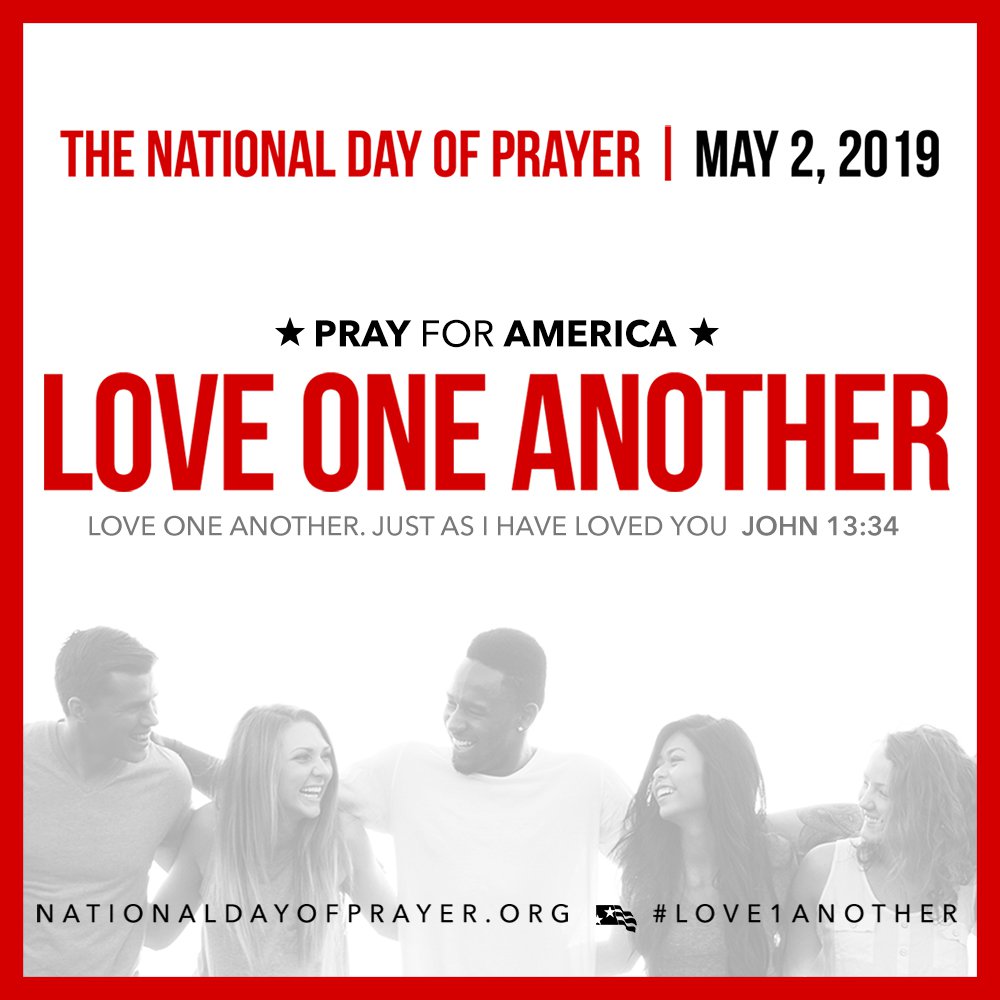
This Thursday, May 2, is an annual event that I will be participating in this year because local pastors Bear Morton and Christopher Folkerts and I will be leading our community to a moment of prayer at the Twin Falls City Park.

Join us at noon on Thursday, May 2 as we pray to the God of the Bible only for our community. May God have mercy upon our community.

Deacon Selection

Eastside Baptist is in the process of selecting more deacons. Here is a series of Sunday night sermons on deacons I did several weeks ago to prepare us for this process. If you have not listened to these sermons, please do so as you are praying, before you select new deacons.

Major Project

At Eastside, we have undertaken a massive project to begin transcribing my preached sermons. I have asked for a team of people to help with this.

It is proving to be quite the task. The task of taking a handwritten outline of sorts that I take into the pulpit, to the preaching of that outline, to the hearing of the sermon, to the printing of that preached sermon.

The early work has begun and it may prove to be a monumental project.

Step one is to load the audio version of the sermon into a software program to get the first printed draft of the transcript.

At first that sounds impressive, and I still think it is. One can, with the click of a button enter a spoken sermon into, what I’ll call, the transcription machine and within a few magical moments it spits out a printed transcript of sorts.

The next step is where the real work begins.

I have a team of people transcribing my sermons from the preaching series in Philippians. They have a very hard job. Have you ever heard me preach?

Wow, not WOW! But more like oh my. I repeat words, phrases, stutter, stammer, and slaughter the English language. About the only thing I don’t do in the spoken word is misspell words (I save that for my blog posts.)

The transcription machine (not really a machine) has a hard time understanding me often, so the kind team of editors have the task of taking what the transcription machine spits out and then putting it all back together for biblical accuracy for the eyes to read.

Here are a few of the interesting things the transcription machine has returned after “listening” to my sermons.

  • Now it’s in acts chapter 16, verse one that Paul came also to the to the town of Derby and to Listerine and the disciple a disciple was there by the name of Timothy.
  • Understanding of imperfections, we get infections. We we. Have infections we have things that we hold dear, things that we cherish.

So, you can see, the editing team has a lot of work to do. The transcription machine spits out more gibberish than I do sometimes.

Maybe if the early church had treated all of their infections with Listerine they would have been healthier. However, I don’t think this would stand the test of peer review for sound theology though. I’m thankful to God for the labor behind the editors from my church who endured my preaching through Philippians a few years ago and are now working on putting them into written form.

I’ve been in dialog with a pastor in India for over a year. This friendship has brought about the reason for this kind of work. It is related to his request for my sermons in print form as he is wanting to put these preached sermons into the hands of pastors without formal training but are in places where people want to know about God.

Pray for us as we undertake this task. May God bless the labor of the editors and the preaching of the preachers who will receive these sermons and them in turn preach them to their congregations. For the glory of God.

The Doctrine of the Lesser Magistrates (part 1): Table of Contents and Introduction

Part one of my live book review of “the Doctrine of the Lesser Magistrates” by Matthew Trewhella

As I’ve stated in previous book reviews, I may not judge a book by its cover, but I do judge a book upon its table of contents. For me, the table of contents is where I give the author first space to make a compelling case for me to read his book. Where I do give weight to endorsements of others I want the author to argue his case by use of words. In it one can usually see what words and how he’ll use those words to argue his case. This is important and it is a constant lesson for me in what words I use and how I use those words to argue my case.

For many, “the Doctrine of the Lesser Magistrates” will require the reader to be hungry to learn. It is going to require the reader to want to know with better understanding and an expanding vocabulary. At best, it will require the reader to want to have better application of textbook vocabulary and an increasing knowledge of history.

The responsibility is on the author, Trewhella, for most readers will be to define terminology while placing the historic need and the modern day practice of what is otherwise a completely forgotten practice. I’m looking forward, with anticipation, to hear Trewhella help this biblical thinker think better.

The table of contents at a glance (admittedly, not the most riveting of reading)

  • Chapter 1: The Doctrine Defined
  • Chapter 2: Rooted in Interposition
  • Chapter 3: All Authority is Delegated
  • Chapter 4: The duty of Lesser Magistrates
  • Chapter 5: The Objective Standard for Law
  • Chapter 6: The Rule of Law and the Lesser Magistrates
  • Chapter 7: Magdeburg and the Lesser Magistrates
  • Chapter 8: John Knox, Holy Scripture, and the Lesser Magistrates
  • Chapter 9: When Lesser Magistrates Go Rogue
  • Chapter 10: The Response of the Tyrannical Higher Magistrates
  • Chapter 11: The Role of the People
  • Chapter 12: The Lesser Magistrate Doctrine in Our Day
  • Appendix A: An Examination of Romans 13
  • Appendix B: The Laws of a Nation Should Mirror the Law and Justice of God
  • Appendix C: The Police Officer as Lesser Magistrate
  • Appendix D: The Interposition of the Military
  • Appendix E: A Biblical Response…
  • Summary

Thoughts on the Introduction:

In the introduction, Trewhella, sets the scene, reminding the reader that all of civilization is aware of, that men, throughout time, have abused authority. Obviously, if men can abuse authority, governments can as well abuse authority. It is therefore the duty that the “citizenry must remain vigilant, and understand both the purpose and limitations of the State.”

He reminds the reader that when the citizens forget or “does not know the purpose and limitation of the State” that this leaves the government at risk of either knowingly (purposefully) or accidentally (passively) thinking wrongly, highly, about its role. The government will begin to think of herself as the savior of the people it governs rather than serving as a monument for why we are a people, nation.

In the midst of the short introduction, Trewhella speaks about (really to) the man in the pulpit.

“In the past, the pulpits in our nation instructed the people in purpose, functions, and limitation of the State. Many pastors preached every year what became known as “election” and “artillery” sermons. These sermons were routinely preached during the first 100 years of our nation. Clergymen understood and taught their congregations that God’s Word addressed all matters of life, including the matters of civil government.”

the Doctrine of the Lesser Magistrates, Matthew Trewhella; introduction p. xii.

As a matter of fact, I recently read what John Adams said of colonial American pastor, Jonathan Mayhew, “He was the morning gun of the Revolution.”

Trewhella, went on to say…

“Today however, most pulpits are silent about God’s Word when it comes to civil government. in fact, most just teach unlimited obedience to the State, as though there are no limitation to the State’s rule. By default, they teach that whatever the civil government rules legislatively is therefore the will of God.

The church pulpits are the historical means whereby the people are instructed, from a theological foundation, in the purpose, functions, and limitation of the State. When a citizenry’s view of the State is theologically-driven, the State can no longer get away with doing whatever just tickles its fancy. This is because an informed citizenry, one which recognized transcendent law, is vigilant, and will not tolerate abuse or tyranny.”


the Doctrine of the Lesser Magistrates, Matthew Trewhella; introduction p. xii – xiii.

He concludes the introduction with a compelling argument of how our national founding fathers established safeguards to protect the government from thinking of itself as our savior (my words).

Trewhella, reminds us that these safeguards are called “boxes” The ballot box, the jury box, and the cartridge box. (To most 2nd Amendment lovers, you get the reference to the “cartridge box”.)

The ballot box is how we deal with and replace unjust rulers. Like many, it is past time to rally citizens to run for public office and then to be sure we vote in the next election cycle. As one engaged from local to national, we need to find outstanding citizens, fit and ready, to enter the race. It is time to replace the unjust men-lovers with humble god-fearers.

The jury box is not a reference to the supreme court. The citizens don’t just have a “right to judge a case, but to judge the law itself.”

The cartridge box is self explanatory to most readers. But remember it is not a right to avenge a wrong someone has done to you. An armed citizenry is as much a reminder to the government that the people will defend themselves against the tyrannical government if need be.

Here is where Trewhella first introduces a working definition of “lesser magistrates”. It was a tool given to the citizens by our government founders as a means to “rein in a higher authority that has spurned its limitations.” This doctrine is rooted in Scripture, I am confident he’ll unfold this in the coming chapters.

“Americans are now nearly a completely conquered people. We do not have to sit by handwringing and passively submitting to our own destruction, however. The doctrine of the lesser magistrates provides a legitimate and proper means to restore order and resist tyranny. History has proven that peasant revolts are easily put down by the State. The lesser magistrate doctrine is effective in quelling abuses by the higher authority, and does so often without the shedding of blood.”


the Doctrine of the Lesser Magistrates, Matthew Trewhella; introduction p. xiv.

In the next post I will include my thoughts on the Chapter 1.

Note for the reader: First, don’t get too frustrated with my grammar or keyboard mishaps (down right bad spelling). Second, I’m a slow reader and answer my own phones so my day has many interruptions that I’m not in control of, so this could be a slow process.
Book Review: “The Doctrine of the Lesser Magistrates”

Today, I will begin a chapter by chapter review of a book on the doctrine of the lesser magistrates. Where I’ve been familiar with the language of the lesser magistrates and teachings on biblical jurisdiction I’ve never read a formal examination of the larger idea.

Why am I reading this book? I’ve been engaged in addressing my local, state and national representatives/senators for most of my adult life. I’ve learned a lot on how and why to engage as a pastor/Christian citizen obey the just laws of the land while not compromising obedience to God. While I’m currently working with several people to abolish abortion in Idaho and to at least appeal to my local city and county to introduce code that would not allow any one or any organization to to murder the human fetus in the womb, I am convinced I need to navigate this issue with a clear working knowledge of how to do this with a Biblical application and practice. So, I want to read what others are thinking then bring all of this thinking to the right plumb line of Scripture for proper application and practice.

I was recently given a copy of “the Doctrine of the Lesser Magistrates” by some new friends. From time to time I have done what I call a “live” book review of books that appear to be of significant weight. This will actually be the fifth live book review. Each of the previous live book reviews proved to be helpful for me. Exercises like this are as much a work of discipline for me to articulate thoughts while they are fresh on my mind.

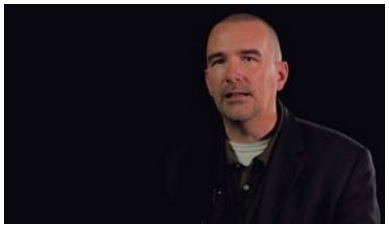
I’ve read several articles and pamphlets by the author, Matthew Trewhella, and find his thoughts challenging and founded upon Scripture. A thinking man who makes biblical application of precepts and principles is always a refreshing exercise of the body, mind, and soul.

You are invited to think with me in what I review from Trewhella’s work “the Doctrine of the Lesser Magistrates.”

Here are several online resources you may find of interest…

I’ll begin the live review shortly after I (re) read the table of contents.

Below is a helpful video that will help explain or introduce the doctrine of the lesser magistrates if this idea is new to your thinking.

Follow

Get every new post on this blog delivered to your Inbox.

Join other followers: