To whom should we extend the right hand of Christian fellowship? To whom are we permitted to extend the right hand of Christian Fellowship?
Background: Over one year ago, I led our church to appoint a “Constitution Committee”, made up of members of the church and the elders. The purpose of this committee was to determine what course of action to put before the congregation related to our structural documents. The decision was made to move in a direction to repeal the current documents and replace with a new Constitution. These men have prayed together, worked together, disagreed with each other, and concluded with an agreed-upon document.
I found the experience challenging, frustrating, joyful, exhilarating, exhausting, and thrilling (all at the same time, a few times).
In endeavors like this, I find it interesting how fast the interpretation of what we have been doing takes on a life all by itself. How do others in other churches know so confidently about what we are doing before we even announce what we are doing? I will forever be mystified by this. My intentions are not nearly as wild as it is reported. As Mark Twain once quipped, “The report of my death has been grossly exaggerated.” The rumors of a doctrinal drift has been grossly exaggerated.
I hear what people say of my favorite author, John Bunyan: “He was barely a Baptist.” I hear other Baptist preachers when asked what they would be if they were not a Baptist, say; “I’d be ashamed.” Is it possible to respect both of those at the same time?
There’s this long line of good thinking related to membership of the local church. There is the complexity of definitions. And the argument that words matter. I agree. They do. All of them. If God welcomes a born-again believer into the universal church who has not been baptized by immersion post conversion, what should we do when God brings them to this local church?
I find it helpful to remember that not all Baptists, present or historic, were in agreement on every matter of our confession. It must have been quite an undertaking to gather independents together to agree upon a confession statement. When our Baptist ancestors set out to do so, they chose to adopt the format of the Westminster Confession. Both the preface and the appendix on Baptism, originally published in 1677 with the first drafting of what is now commonly known as the Second London Confession, give us some insight into the desire of Baptists to be in fellowship with orthodox Christianity.
The Baptists in 1677 recognized the Westminster and the Savoy confessions as helpful in drafting their confession by stating…
“This we did the more abundantly to manifest our consent with both in all the fundamental articles of the Christian religion, as also with many others whose orthodox Confessions have been published to the world on the behalf of the Protestant in diverse nations and cities—and also to convince all that we have no itch to clog religion with new words, but do readily acquiesce in that form of sound words which hath been, in consent with the Holy Scriptures, used by others before us; hereby declaring, before God, angels, and men, our hearty agreement with them in that wholesome Protestant doctrine which, with so clear evidence of Scriptures, they have asserted. Some things, indeed, are in some places added, some terms omitted, and some few changed; but these alterations are of that nature as that we need not doubt any charge or suspicion of unsoundness in the faith from any of our brethren upon the account of them.”
Our Baptist fathers noted that the differences between the other confessions were small differences.
“In those things wherein we differ from others, we have expressed ourselves with all candor and plainness, that none might entertain jealousy of aught secretly lodged in our breasts that we would not the world should be acquainted with. Yet, we hope we have also observed those rules of modesty and humility as will render our freedom in this respect inoffensive, even to those whose sentiments are different from ours.”
I have been convinced by their words, not the words of what others said they said, convinced by the affinity and charity my Baptist fathers had with their Westminster and Savoy brothers. The preface and appendix on Baptism are examples of such charity.
“…contention is most remote from our design in all that we have done in this matter.”
Finally, It is reported of the earliest of our post-Reformation Baptist kinsmen, Henry Jessy (1601-1663), that he was a “patient reformer.” I think the following is a fair description of a first-generation Particular Baptist.
“Despite his strong convictions about believer’s baptism, Jessey did not split the church over the question. As his biographer notes, “He always had some in his congregation of the Padobaptist Perswasion, & blamed those that made their particular opinion about baptism the Boundary of Church Communion.” This has led some to view Jessey as an advocate and practitioner of “open membership.” Others, such as John Bunyan, have looked to Jessey as an example of “open communion”—meaning that *unbaptized persons are permitted to the Lord’s Supper of a local church.
It seems that Jessey simply recognized that since believer’s baptism had not been a prerequisite for church membership at the onset, it was imprudent to require existing members to violate their consciences by submitting to what they would consider “re-baptism.” Instead, he patiently preached the truth and waited for the minds of his members to change, just as it had taken years for his own views on the matter to change.”
(From a doctoral dissertation on the reformation of “believer’s baptism” by Duesing, page 136)
I have written the following from these Primary Sources: The subjects of baptism, unity, and the local church in the New Testament. Historic Confessions (Westminster, Savoy, 1689 Baptist) statements of orthodox Protestant Reformed Churches, and What Reformed Baptist Believe. And these Secondary Sources: John Bunyan, Robert Hall Jr, Abraham Booth, and John Piper.
The argument is as follows:
Introduction: Form/mode of Baptism is important to me. The timing of Baptism is important to me.
Questions:
- Should a person baptized by immersion in the name of the Father, Son, and Holy Spirit be considered for membership based on the mode of said baptism? Baptists would typically say “yes”; however, many false converts may be baptized and not be true disciples. Such individuals are however, granted membership in many local churches because the form/mode of their baptism was considered legitimate. There has been real injury to local churches for having unconverted members who had been baptized by immersion as members. This will continue to happen because only God knows the heart. This should not keep us from baptizing confessing believers.
- Should a person not baptized by immersion (but with water, in the name of the Father, Son, and Holy Spirit) be rejected for membership in a Baptist church because the form/mode of their baptism was considered irregular? Baptists might typically say “yes”; however, some may be baptized as an infant and have been truly converted by the grace of God as legitimately as any other convert. Not because of their infant baptism but because of a profound conversion. Denying them church membership because of an irregular mode/form of their baptism could deprive the local church of their gifts. This does happen.
- When Baptists refuse membership of a true convert based on the mode and timing of their baptism, we may be found guilty by God of refusing fellowship with a brother/sister based upon a second-tier issue, which is a serious violation of New Testament teachings of practicing Christian unity. Why are we willing to bring into the membership those baptized by immersion who may not be genuinely converted, while refusing to accept the membership of one who may be a true convert but was baptized as an infant? To do this, are we guilty of preemptive church discipline?
What Then Can We Allow and What Should We Forbid?
FIRST: This is not a conversation about how this church will practice baptism. And, we are united that baptismal regeneration is a serious error and does injury to the doctrines of Grace. We could argue that the mode/form of believer’s baptism is regular, but baptismal regeneration must continue to be rejected as a valid baptism. No person seeking to join this church, believing that their trinitarian baptism was required for their salvation, should be expected to be seated as a member in good standing of this church, even if by immersion. Mode/form is important, but it is not and cannot be the most important.
Following is not an exhaustive list of thoughts but a place where thinking has been exercised with purpose.
- Eastside Baptist does not practice the baptism of infants.
- This church will not allow membership to anyone who believes baptism is required for salvation.
- This church could allow membership of all confessing believers who agree with Protestant Reformed Confessions (and the like). For example: 1689 Second London Baptist Confession, Westminster Confession, Savoy Confession, the Belgic Confessions, Philadelphia Confessions (both the Westminster and Baptist), New Hampshire Confessions, Baptist Faith and Message, etc.
- The responsibility of those seeking to join this church is that they know and agree they are joining a Baptist Church that baptizes confessing believers only.
- I conceded that some Baptists in our history indeed forbid membership of anyone not baptized by immersion post conversion. Some even go so far as to say that a Baptist can only accept people into membership if they were baptized in a Baptist church (more on that later). I recognize the reasons for this action with respect. I contend it is a fair representation of conclusions based in part on a larger body of Baptists who don’t all agree upon this reasoning.
SECOND: Different traditions about the proper mode/form of baptism (immersing, sprinkling, pouring), and different convictions with respect to the mode/form of baptism anyone has experienced, should not be a first-tier reason to exclude a person from membership of the local church if he is first a genuine born-again believer. Sanctification is a proper work of the Holy Spirit. No conscience should ever be violated if a credible conversion can be determined by the statement of faith of the individual seeking to join this church. Should we accept the Baptism of someone baptized at a Calvary Chapel Church, a Mennonite Church, a Christian Church, a Community Church, a KJV only church, an Assembly of God Church, a Presbyterian Church, or a Congregationalist? I will argue we are closer theologically to any Westminster or Savoy Confessional church than most of the others.
- First-tier reasons to allow membership to this local church should include believing the Trinity (Diety of the Father, Son, and Holy Spirit), the five solas (Scripture alone, Christ alone, faith alone, grace alone, for the glory of God alone), virgin conception, life, death, resurrection and physical return of Christ. Jesus is still both God and man. There is only one God in all existence. Must be born again. Salvation is by grace alone, through faith alone, in Christ alone. Jesus is the only way to God the Father.
- The absence of baptism here does not mean that baptism is not important; it is a statement that believer’s baptism is not a first-tier doctrine. NOTE: Baptismal regeneration is a first-tier issue because it does not rest on the work of Christ alone. How and when one is baptized is important to us, but is not a first-tier issue. When we state we will only baptize by immersion of confessing believers, we are speaking with clarity of our belief and practice; we should not feel the need to compromise on this second-tier practice while being gracious to our brothers who practice and believe otherwise.
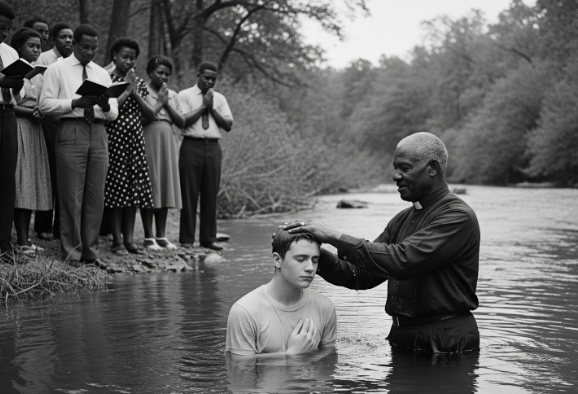
THIRD: All people seeking to join this church should never be surprised that this local church practices baptism by immersion of confessing believers only. Accepting a born-again believer with an irregular baptism does not compromise our position of credobaptism (believer’s baptism). Different positions of mode or timing of baptism are not weighty enough matters to exclude them from membership in this local church.
- Requirements for membership in the local church should not be narrower than what Christ requires. Again, we should practice within the realm of our convictions. This is being gracious, not compromising. Compromising would be that we would no longer exclusively practice baptism by immersion of confessing believers.
- Being gracious is different from compromising. Where both can have beneficial attributes when forming membership, people can practice graciousness within a fellowship while not compromising the values or tenets of the organization. I argue we do this every time we gather.
FOURTH: There is sufficient history, even among our Baptist kinsmen, to establish that credobaptists have divided many times over this matter.
- One church will baptize a 5-year-old, another will not baptize until 18 or 19 or 20.
- Another church will only baptize in running water,
- Another will dip the candidate three times (in the name of the Father, the Son, the Holy Spirit).
FIFTH: Not all doctrines are of equal weight in shaping Christlike holiness and love. (HT: John Piper)
- The translation of the Bible is very important. There are some translations to avoid and should not be considered as suitable for use by our church, however, we would not forbid a member from using another bible translation that what the preacher uses. At our church, the elders use NASB, ESB, KJV, NKJV. I’ve even been known to consult my NIV from time to time (not very often). We would not require any member to stop using a legitimate translation and only use one of our approved translations.
- There was a time when nearly all Christians in Baptist churches had been won over to a dispensational eschatology. It is a theological drift that a generation of Baptists know. It is not just a viewpoint, it has theological implications that are at odds at times with Biblical orthodoxy. Yet we would not forbid membership on the three eschatological viewpoints.
SIXTH: The Westminster and Savoy defense of infant baptism admits that circumcision was not a sign of belonging to the believing remnant of true Israel, but rather was a sign of hope that a child would prove to be a “child of promise” and not just a “child of the flesh” (John Piper). We can see how they make the correlation between circumcision (old sign) with baptism (new sign). This can no doubt cause confusion, but I think it is an attempt to understand how our brothers defend their belief and practice.
- The issue is whether membership in the visible New Covenant Community should include infants who do not profess faith, which is the outward mark of the New Covenant Community. A local community of Baptists may view their children as part of the local church without claiming they are part of the universal church.
- As Baptists, we do not see any New Testament example of a Biblical case for infant baptism. However, I think we may be closer than one may think to the application of the rationale our Westminster and Savoy brothers make of children belonging to believing parents having serious measures of responsibilities. This baptism is not, and should not be, treated as an instrument or evidence of an infant’s regeneration. Our Westminster and Savoy brothers teach this as an expression of hope that in a Christian family, the child will be the beneficiary of the means of saving grace by word and prayer and all forms of Christian nurture. Our Baptist practice of baptism by immersion of confessing believers must not wrongly accuse our brothers of baptismal regeneration. That would be uncharitable and inconsistent with their historic confessions.
- Do some who hold to the Westminster and Savoy Confessions treat this practice wrongly? Yes, in the same way, as do some who hold to the Baptist Confessions.
SEVENTH: None of the historic confessions treat infant baptism as baptismal regeneration or even guarantee that saving grace be applied to the children. All such views are a perversion of the primary documents and historic teachings. Just as it is a perversion of our Baptist doctrines that the baptism of one “confessing” faith in Christ is secure in Christ. Only those whom the Father has elected are of the house of God. There are not two houses of God. There is but one. (HT: John Piper)
- I do not view the Westminster or Savoy Confessions as teaching baptismal regeneration. This church must be careful not to wrongly accuse our brothers of doing so, either.
- Where I disagree with the practice of infant baptism, I do not view the doctrine of the Westminster or Savoy to be heterodox to the Christian faith. It is an irregular application of what the Bible teaches related to baptism. Therefore, I do not see it as a weighty or central enough departure from historic Christianity to exclude such a person from membership.
- I repeat, this does not compel me to compromise on our practice of believers’ baptism in an attempt to be charitable. Rather, it strengthens my resolve to be convictionally charitable with joy.
- If an individual has all the qualifications of being born again and is otherwise persuaded from Bible study and a clear conscience that his baptism is valid and still seeks to join our Baptist church, which only baptizes believers by immersion, he not only can, but should be welcomed with the right hand of Christian fellowship. In such a case, we should not be compelled to compromise our convictions to ease his conscience. We can teach and pray toward a change of mind that baptism by immersion may one day be their desire.
EIGHTH: We have no reason to avoid forming partnerships with Christians who hold to the historic confessions in orthodox Christendom. We should expect to be edified and informed by theologians in the glorious kingdom of Christ.
NINTH: Related to communion. We practice what we call “close” communion. Historically, Baptist are a mixed bag on this subject as well. We can live with respect for our Baptist kinsmen who bar nonmembers from taking communion. This is referred to as “closed” communion.
- We welcome to the Lord’s Table those who are members of the catholic (universal) church. Meaning those who hold to historic and orthodox Christian confessions.
- As stated before, those who hold to a baptismal regeneration persuasion would not be suitable participants with us at the Lord’s Table.
- We would fence the table from “open” communion, ie, the unrepentant open profane sin.
Conclusion:
If we hold that paedobaptism as invalid, then we should carry that logic to its full conclusion. If the paedobaptized individual should be barred from this local church as a member, he should be barred from the table as well. If barred from the table, he should be viewed as an unbeliever. We should apply this equally to all paedobaptized people in church history and ban the reading of paedobaptist theologians and forbid the singing of songs they have written. We should practice consistency with the conclusion. I, for one, cannot make any of the latter conclusions, so why forbid the first?
Rather, may the day come when the debate of water will no longer divide the living saints in Christendom. Can the Lord’s church not be in unity? If not now, may it happen before we breathe our last or at least in our children’s lifetime. I am perfectly willing to commune and fellowship with the historic orthodox paedobaptists while not compromising our credobaptist practice.
Respectfully submitted.
No Comments